
Standing desks are a mainstream tool for modern workplaces, promising better posture, more energy and a healthier daily rhythm. But joining the stand-up movement without guidance can backfire: standing incorrectly or for too long can cause fatigue and strain. I asked fitness pros — trainers, physiotherapists and occupational coaches — to share the strategies they teach clients who use sit–stand solutions. Below are ten practical, research-aligned tips you can apply today, whether you work at a compact home station or at an office outfitted with executive units.
Standing Desks — Start with short standing intervals
Fitness professionals unanimously recommend a gradual approach. Begin with 10–15 minute standing blocks and build up as your legs and back adapt. Many pros use a 1:3 to 1:4 ratio of standing to sitting at first — for example, 15 minutes standing for every 45–60 minutes seated. Shorter intervals are less fatiguing and reduce the chance of overuse symptoms. Use a timer or the desk’s memory preset to remind you to switch postures without interrupting flow.
Sit Stand Desk — Use standing for the right tasks
Not every task benefits from standing. Trainers advise using a sit stand desk for activities that involve light typing, phone calls, ideation and video meetings where mobility helps presence. Reserve highly focused, detail-heavy work — long coding sessions or intensive editing — for seated periods when micro-movements could become distracting. Switching posture according to task encourages mental variety and reduces the monotony that leads to fatigue.
Adjustable Height Desk — Set true ergonomic heights
An adjustable height desk can only help if you set it correctly. Pros stress two rules: your keyboard should sit at elbow height with wrists neutral, and the top of the monitor should be at or just below eye level. Use a tape measure or a simple visual check to get the seated and standing heights right. A poorly set desk forces compensatory posture — forward head, hunched shoulders — which erodes the potential benefits of standing.
Office Heroes: 10 Tips from Fitness Pros on Using Standing D
5 Beiträge • Seite 1 von 1
Office Heroes: 10 Tips from Fitness Pros on Using Standing D
 von vernaldesk » Fr 9. Jan 2026, 12:44
- vernaldesk
- Beiträge: 10
- Registriert: Fr 9. Jan 2026, 12:41
Re: Office Heroes: 10 Tips from Fitness Pros on Using Standing D
von vernaldesk » Fr 9. Jan 2026, 12:45
Electric Height Adjustable Desk — Use presets to reduce friction
Fitness coaches love electric adjustable desks for one key reason: removing friction. With electric height adjustment you’re more likely to change posture frequently because it takes seconds instead of minutes. Create two or three presets — sitting, work standing, and meeting standing — and use them consistently. That consistency helps your body learn the correct postures and prevents fiddling with suboptimal interim heights.
Adjustable L Shaped Desk — Zone movement across tasks
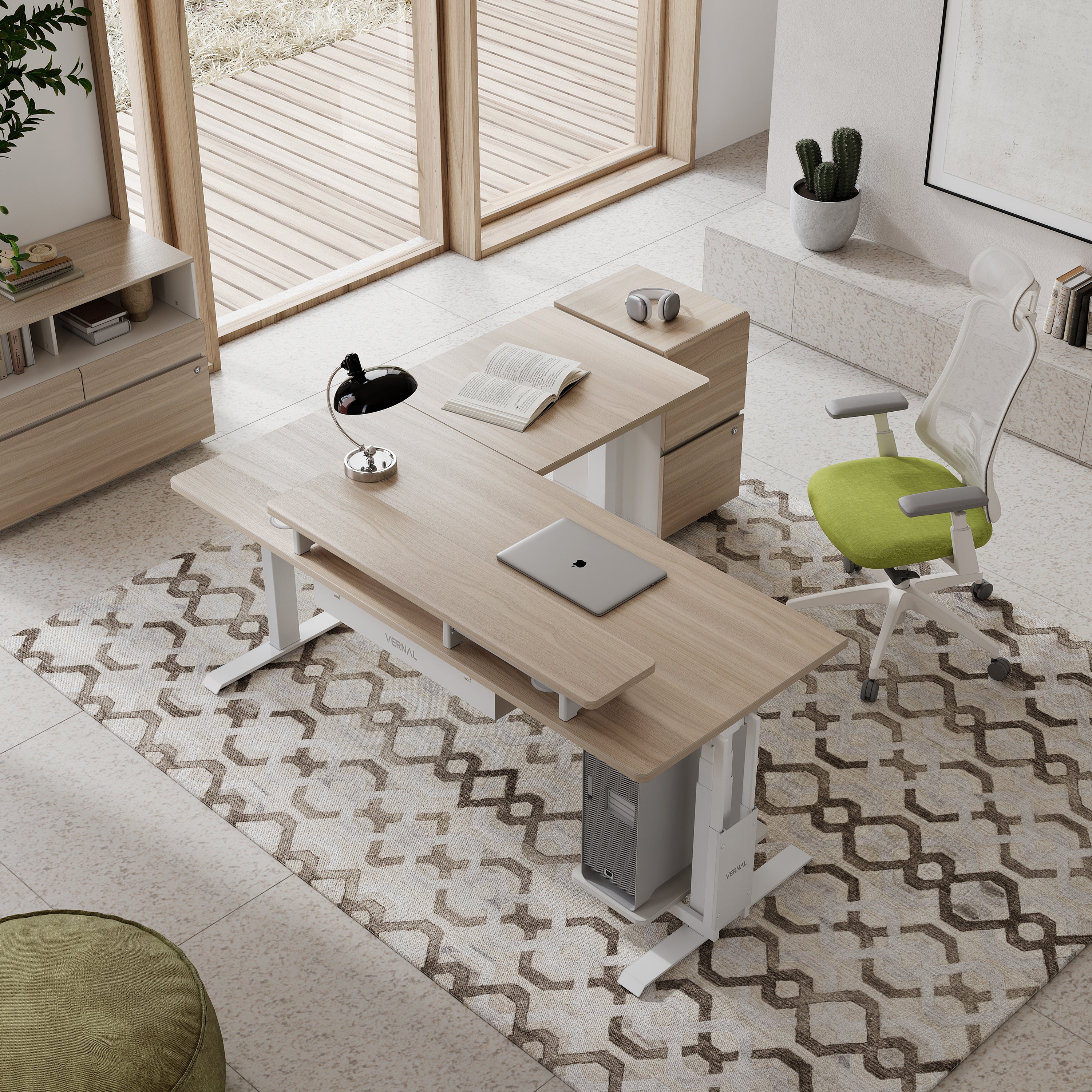
For people with multi-task workflows, an adjustable L shaped desk is a strong recommendation from trainers. Use the long wing for seated deep work and the short wing for standing tasks. This physical zoning encourages natural movement between tasks and reduces the cognitive cost of switching. Fitness pros note that moving even a few steps across a corner desk increases circulation and cognitive refreshment more than remaining static.
Stand Up Executive Desk — Use standing for presence
A Stand Up Executive Desk is more than a status symbol — it’s a tool for presence. Fitness and performance coaches suggest standing when you need to be more animated or authoritative during meetings, pitches or client calls. Standing increases vocal projection, gestures and nonverbal engagement, which can raise energy in the room and sharpen focus for both speaker and listeners. Pair standing with a confident posture: neutral spine, shoulders back, weight evenly distributed on both feet.
Fitness coaches love electric adjustable desks for one key reason: removing friction. With electric height adjustment you’re more likely to change posture frequently because it takes seconds instead of minutes. Create two or three presets — sitting, work standing, and meeting standing — and use them consistently. That consistency helps your body learn the correct postures and prevents fiddling with suboptimal interim heights.
Adjustable L Shaped Desk — Zone movement across tasks
For people with multi-task workflows, an adjustable L shaped desk is a strong recommendation from trainers. Use the long wing for seated deep work and the short wing for standing tasks. This physical zoning encourages natural movement between tasks and reduces the cognitive cost of switching. Fitness pros note that moving even a few steps across a corner desk increases circulation and cognitive refreshment more than remaining static.
Stand Up Executive Desk — Use standing for presence
A Stand Up Executive Desk is more than a status symbol — it’s a tool for presence. Fitness and performance coaches suggest standing when you need to be more animated or authoritative during meetings, pitches or client calls. Standing increases vocal projection, gestures and nonverbal engagement, which can raise energy in the room and sharpen focus for both speaker and listeners. Pair standing with a confident posture: neutral spine, shoulders back, weight evenly distributed on both feet.
- vernaldesk
- Beiträge: 10
- Registriert: Fr 9. Jan 2026, 12:41
Re: Office Heroes: 10 Tips from Fitness Pros on Using Standing D
von vernaldesk » Fr 9. Jan 2026, 12:45
Wood Standing Desk — Choose materials that support calm
Material and finish influence mood. Many pros find that a wood standing desk top reduces visual stress and increases comfort compared with stark metal surfaces. Natural textures can lower perceived effort and make standing sessions feel easier. If you choose wood, ensure the frame supports the heavier top and that surface edges and finishes are ergonomic for writing and resting arms.
Vernal Standing Desk — Inspect stability and motor performance
Whether considering a Vernal Standing Desk or another model, fitness professionals advise checking real-world stability and motor smoothness. A wobbly frame forces constant micro-corrections, which leads to muscular fatigue. If the desk has an electric motor, verify noise levels and the speed of transitions. Reliable hardware encourages frequent sit–stand transitions because the desk becomes a seamless part of the workflow rather than a nuisance.
Vernal Space Reviews — Learn from user experiences
Before you buy or recommend units for a team, read Vernal Space Reviews and other verified user reports. Trainers find that long-term comfort depends on details often omitted from spec sheets: how the desk behaves under a loaded top, how easy it is to assemble, and how responsive customer service is when parts wear. Aggregate user feedback helps identify which models stay comfortable after months of daily use.
Practical tip — Pair standing with movement and recovery
The single most repeated tip from fitness pros: pair standing with purposeful micro-movements and recovery strategies. Use an anti-fatigue mat to reduce foot strain; alternate weight between feet every few minutes; perform gentle calf raises, hip circles and thoracic rotations during standing blocks. Schedule short walking breaks every hour and add a daily light mobility routine — 5–10 minutes of stretching or foam rolling — to offset cumulative tension. Recovery habits are what turn standing from a short-term novelty into a sustainable practice.
Putting it all together
Standing desks and sit–stand culture offer real benefits when used with intention. The fitness pros’ advice converges on a few principles: start small, match posture to the task, set ergonomic heights precisely, minimize friction using electric presets, and integrate movement and recovery. Whether your workplace uses an Adjustable Height Desk, an Adjustable L Shaped Desk, or a premium executive unit, these strategies reduce risk and amplify the benefits.
Bonus checklist: daily standing routine
Warm up: 2 minutes of gentle leg swings and ankle circles.
Standing blocks: 15–20 minutes to start, increase gradually.
Micro-movements: shift weight, calf raises, shoulder rolls every 3–5 minutes.
Break: 5–10 minute walk every 60 minutes.
Evening recovery: light stretching focused on hamstrings, hips and chest.
Use these fitness pro tips to form a standing desk habit that supports longevity and performance. Read product reviews, test setups where possible, and tailor routines to your workload and body. With a thoughtful approach, your standing desk can be a true office hero — boosting energy, focus and resilience day after day.
Material and finish influence mood. Many pros find that a wood standing desk top reduces visual stress and increases comfort compared with stark metal surfaces. Natural textures can lower perceived effort and make standing sessions feel easier. If you choose wood, ensure the frame supports the heavier top and that surface edges and finishes are ergonomic for writing and resting arms.
Vernal Standing Desk — Inspect stability and motor performance
Whether considering a Vernal Standing Desk or another model, fitness professionals advise checking real-world stability and motor smoothness. A wobbly frame forces constant micro-corrections, which leads to muscular fatigue. If the desk has an electric motor, verify noise levels and the speed of transitions. Reliable hardware encourages frequent sit–stand transitions because the desk becomes a seamless part of the workflow rather than a nuisance.
Vernal Space Reviews — Learn from user experiences
Before you buy or recommend units for a team, read Vernal Space Reviews and other verified user reports. Trainers find that long-term comfort depends on details often omitted from spec sheets: how the desk behaves under a loaded top, how easy it is to assemble, and how responsive customer service is when parts wear. Aggregate user feedback helps identify which models stay comfortable after months of daily use.
Practical tip — Pair standing with movement and recovery
The single most repeated tip from fitness pros: pair standing with purposeful micro-movements and recovery strategies. Use an anti-fatigue mat to reduce foot strain; alternate weight between feet every few minutes; perform gentle calf raises, hip circles and thoracic rotations during standing blocks. Schedule short walking breaks every hour and add a daily light mobility routine — 5–10 minutes of stretching or foam rolling — to offset cumulative tension. Recovery habits are what turn standing from a short-term novelty into a sustainable practice.
Putting it all together
Standing desks and sit–stand culture offer real benefits when used with intention. The fitness pros’ advice converges on a few principles: start small, match posture to the task, set ergonomic heights precisely, minimize friction using electric presets, and integrate movement and recovery. Whether your workplace uses an Adjustable Height Desk, an Adjustable L Shaped Desk, or a premium executive unit, these strategies reduce risk and amplify the benefits.
Bonus checklist: daily standing routine
Warm up: 2 minutes of gentle leg swings and ankle circles.
Standing blocks: 15–20 minutes to start, increase gradually.
Micro-movements: shift weight, calf raises, shoulder rolls every 3–5 minutes.
Break: 5–10 minute walk every 60 minutes.
Evening recovery: light stretching focused on hamstrings, hips and chest.
Use these fitness pro tips to form a standing desk habit that supports longevity and performance. Read product reviews, test setups where possible, and tailor routines to your workload and body. With a thoughtful approach, your standing desk can be a true office hero — boosting energy, focus and resilience day after day.
- vernaldesk
- Beiträge: 10
- Registriert: Fr 9. Jan 2026, 12:41
Re: Office Heroes: 10 Tips from Fitness Pros on Using Standing D
von vernaldesk » Fr 9. Jan 2026, 12:45
- vernaldesk
- Beiträge: 10
- Registriert: Fr 9. Jan 2026, 12:41
Re: Office Heroes: 10 Tips from Fitness Pros on Using Standing D
von deanclark78 » Mi 21. Jan 2026, 07:34
Knowing how to choose quality black jackets helps you make a smart, stylish, and long-lasting purchase. Focus on premium materials, strong stitching, comfortable fit, durable hardware, and practical features. A good black jacket is a timeless fashion essential that suits every season and every occasion. By paying attention to quality details, you can find a jacket that not only looks great but also stands the test of time.
- deanclark78
- Beiträge: 1
- Registriert: Mi 21. Jan 2026, 07:28
5 Beiträge • Seite 1 von 1
Zurück zu Hertha 03 FZ II - Spielberichte
Wer ist online?
Mitglieder in diesem Forum: 0 Mitglieder und 3 Gäste